
Natick Previous Residents by Era
For a Natick address, keep legal ownership separate from occupancy. The Middlesex South Registry of Deeds supplies the ownership transfer trail. The Natick Historical Society preserves resident lists and printed directories that can place a household at an address. Census, newspaper, probate, and vital material help explain a move, a death, or a family connection. The strongest answer usually comes from several dated records, not from one match.
Begin with the source closest to the period in question. A recent address may be best anchored in the assessor card and deed reference. A twentieth-century question may need the 1911 street section, the 1965 Resident and Business Directory, or the Natick List of Residents. Older questions often move through valuation records, census schedules, maps, and Registry books. The dates below are documented holdings and access paths, not a promise that every household appears in every year.
| Source | Local years covered | Where held | What it can show |
|---|---|---|---|
| Middlesex South deed index | Current portal; earliest online year not stated; Books 1-1024 have a separate mode | MassLandRecords and Registry office | Transfer parties, dates, book or document references, plans, and legal descriptions |
| Natick List of Residents | 1850-2019 | Natick Historical Society | Local resident-list snapshots, which may be annual or irregular |
| Natick directories | 1873, selected 1900-1931 editions, 1911, and 1965 | Historical Society, library databases, and archive sources | Names, addresses, occupations, and some street listings |
| Natick valuation and assessor reports | 1854-2011 | Natick Historical Society | Owner, resident, and property-value pairing |
| Federal and state census | Federal 1790-1930 at NHS links; 1940 and 1950 public; state census 1855 and 1865 | NHS and genealogy repositories | Household composition, relationships, and period context |
Property ownership and residence are not interchangeable. A deed owner may have lived elsewhere, and a directory entry may describe a non-owner household member or a business. Use each as evidence for its own purpose, then compare the dates.
Note: The Registry landing page does not publish its earliest indexed year, so a blank online result is not proof that an older Natick transfer is absent.
Start With a Natick Parcel Record
Use Natick MapGeo or the town’s Property Assessment Information page to normalize the address before searching the past. The FY2026 integrated assessment and WebGIS entry points are by owner name and property address. A property card can connect the situs address, owner, assessed land and building information, and legal deed reference. Record the map or lot identifier if the card provides one. Street names, house numbers, and parcel shapes can change over time, but the legal reference gives the next search a firmer anchor.
An owner mailing address is useful only as a lead. Natick notes that mailing-address changes for tax bills go through Assessors, and a mailing address can belong to a business, attorney, family member, post office box, or former address. It does not establish where a person lived. For a present-day street-by-street method, use the separate Natick Street Directory resource after the parcel is identified.
The Natick Historical Society house-history guide shows the local research path from MapGeo to South Middlesex land records, maps, valuation material, census, and printed collections.
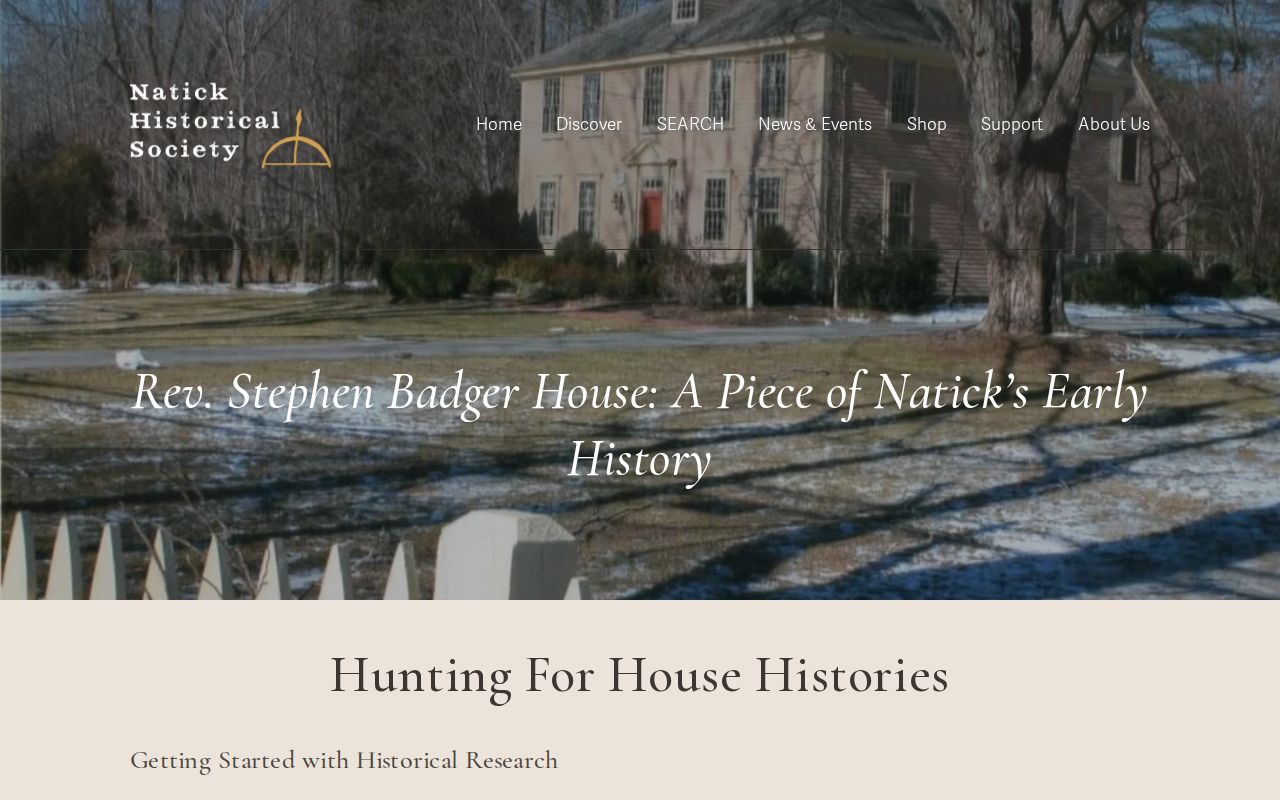
That sequence is useful because it keeps today’s parcel evidence distinct from the historical records used to identify past residents.
Trace Natick Past Owners Through Deeds
Natick land records are kept through the Middlesex South Registry of Deeds, rather than a town recorder. The portal separates Recorded Land, Registered Land, Plans, and Registered Land Plans. Recorded Land offers name, document, book, property, recorded-date, and Unindexed Property Search modes. Search, image viewing, and downloads were described as free when the research was inspected. The portal has not published an earliest indexed year, so use the Registry office when an early link is missing.
A chain of title is the dated sequence of legal transfers. The grantor is the party giving or conveying an interest, while the grantee receives it. A deed’s legal description identifies the property by a lot, plan, bounds, or other legal wording. It is often more durable than a street address. Keep the deed’s execution date separate from its recording date.
- Open the assessor card and copy the current owner, address, deed reference, and any parcel or map-lot information.
- In the Registry Property Search, select NATICK and enter the street number and street name. If that fails, search the owner as a grantee.
- Open the purchase deed and note the grantor, grantee, instrument type, dates, book and page or document number, legal description, and any plan reference.
- Search that grantor as a prior grantee to locate how the seller acquired the same property. Repeat backward, testing spelling and name variations.
- When the online chain stops, try Registered Land, Plans, legal-description and plan searches, then Unindexed Property Search for Books 1-1024. The Registry counter, terminal, deed books, and archives are the documented fallbacks.
Plans matter when a parcel was merged, split, or renumbered. A deed is evidence of a legal transfer, not proof that the listed party occupied the house. The Registry is at 208 Cambridge Street in Cambridge, and staff can help with records that do not surface through a first portal search.
Natick Records Beyond Online Indexes
The key historical fallback in the Middlesex South system is the separate Unindexed Property Search for Recorded Land Books 1-1024. Try it when a name or property search finds no modern hit. The Registry also provides Registered Land and Plans routes. Test old street names, seller and buyer spellings, a plan number, a lot reference, and the legal description before treating a gap as final. The site warns that pop-ups and Adobe Reader may be needed for some image functions.
Older Natick research does not end at the web portal. Registry staff, public terminals, deeds and microfilm can provide another route. The Massachusetts Archives and FamilySearch are documented historical channels. Natick’s Town Clerk and public-records process can also respond to specific requests for existing municipal records under the Massachusetts Public Records Law, M.G.L. c. 66, § 10. Make the request narrow by address, record type, and date range. That helps the custodian locate a real record and identify any required redactions.
Note: A scanned image, a clerk’s certified copy, and an index entry have different roles, so ask the custodian which form answers the question.
Natick Historic Villages and Address Continuity
Natick’s location labels can complicate a search for previous residents. South Natick developed around Eliot, Union, and Pleasant streets near the Charles River, while later civic development formed around Natick Center. West Central Street is associated with the Henry Wilson Historic District. Felchville and Cochituate add further historic labels. A directory or deed may use a village name that does not match the first result in a modern parcel search.
No verified Natick street-renumbering year was located. Do not assume that a number changed in a specific year. Instead, bridge the address with the circa-1853 map, the circa-1892 valuation and resident list, the directory street section, a deed legal description, a recorded plan, and current MapGeo. The 1744 annexation of part of Needham, the 1745 Natick District, and incorporation in 1781 are also reasons to check related place labels in older material.
The Library of Congress Sanborn map guide explains how to search map material. Public-domain maps are digitized, but some 1923-1930 sheets are restricted or unavailable online.
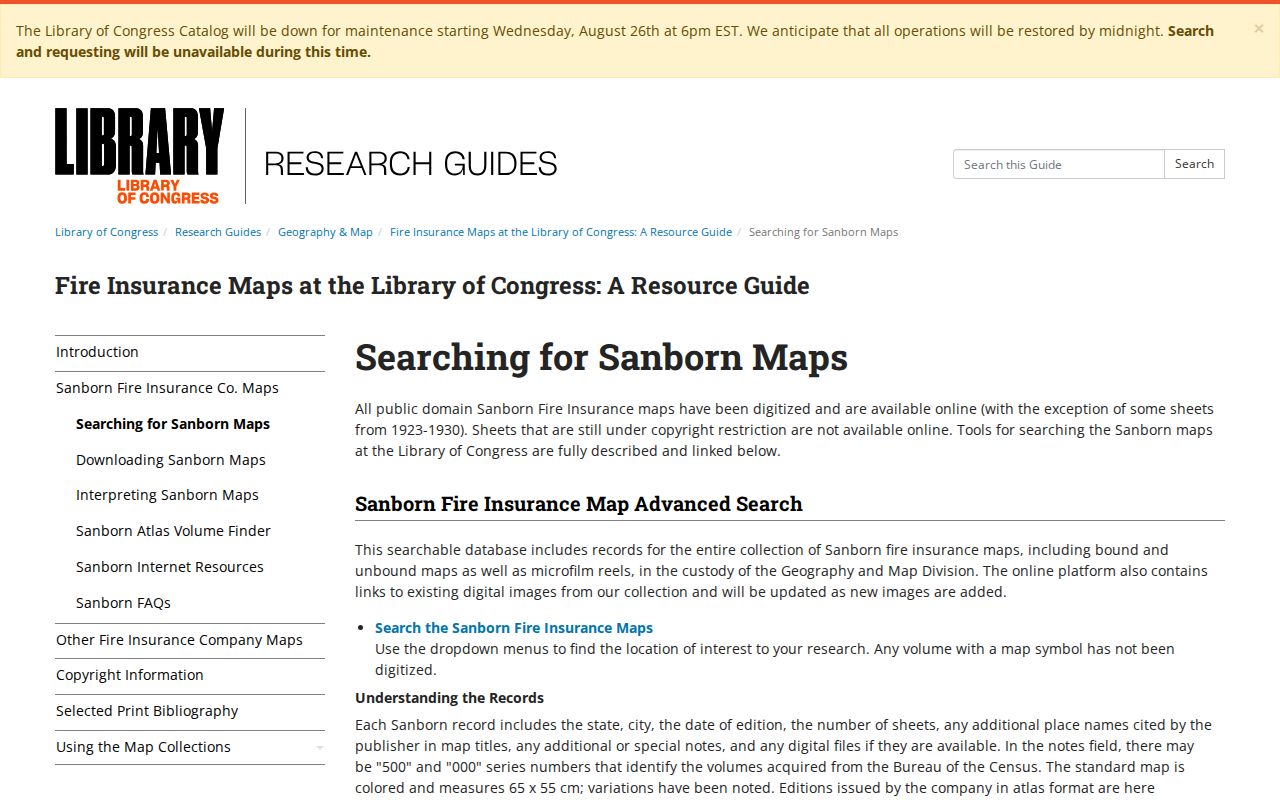
Compare a historic map with the parcel map to study a building footprint or street form, while relying on plans and deeds for legal boundary questions.
Natick Household Sources for an Old Address
Deeds tell only part of a house history. For occupants, use the 1911 Lakeview Press Resident and Business Directory, the 1965 Resident and Business Directory, and the Natick List of Residents, which runs from 1850 to 2019 at the Historical Society. The 1911 volume includes resident, street, and business sections as well as civic material. The verified catalogue and digitized editions include 1873 and selected years from 1900 through 1931, but a continuous publisher run has not been established.
Look up a name in the alphabetical section, then check the same year’s street section where available. Write down the spelling, occupation or business detail, household notation, and address. A missing name can mean a move, a directory gap, a non-head household member, a seasonal absence, or an OCR issue. The collections themselves are described in the Natick Directory Book.
The Internet Archive is the established host used for Natick vital records to 1850, the 1911 directory, and yearbooks through links supplied by the Historical Society.
Archive copies are useful reading copies, but verify the edition and page before treating an entry as dated address evidence.
Pair Natick Address Records With Census
Use the directory date as a bridge to household records. Natick Historical Society sources list Massachusetts state censuses for 1855 and 1865, federal census access from 1790 through 1930, and later public federal schedules for 1940 and 1950. Federal schedules later than 1950 are generally closed under the 72-year release rule as of 2026. Census can show household members, ages, relationships, birthplace, and occupation, but the form of address information varies by year.
- Choose a dated directory or resident-list entry and preserve the address exactly as printed.
- Search the closest available federal or Massachusetts state census for the surname, spelling variants, initials, and the village name.
- Compare household members and address clues with the directory. Do not force a match based on a common name alone.
- Check the next directory year, an assessor valuation, and newspapers to account for a move, death, or change in household.
- Use probate or a vital-record request only when the relevant custodian and access rules support the needed record.
Historic Natick newspapers digitized by Morse cover 1856-1974 and can provide obituaries, marriage notices, probate notices, moves, civic activity, and business names. Probate filings at Middlesex Probate and Family Court can identify heirs and fiduciaries, but an heir is not automatically an occupant.
Natick Preservation Routes for Older Records
Natick’s records have both digital and physical paths. Town reports from 1850-2020 are searchable in the Morse Internet Archive collection according to a library trustee report, while the Historical Society lists resident rolls, assessor reports, maps, photographs, school records, family papers, and business collections. The town’s 2025-2026 capital program describes ongoing historic-document preservation and projected digitization funding for FY2027 and FY2028. Older material may therefore be available through a shelf, finding aid, or request before it appears in a unified search.
The 1874 Natick Center fire destroyed downtown business blocks, shoe factories, Town Hall, a fire engine house, a church, and homes. It can explain why a record trail needs cross-checking, but no definitive inventory of records lost or reconstructed was located. Do not claim a particular deed or vital book was destroyed without a custodian record.
Lawful use. Natick house-history and previous-residents research supports family history, property history, and personal curiosity. Do not use records to stalk, harass, or harm any living person.